glyph 2.0
- What
- Pocket-sized e-ink companion for XR and ambient AI.
- Role
- Hardware, firmware, design.
- Span
- 2026
- Status
- active
glyph v2 does the same things v1 did. The update isn’t one about features.
The first version of glyph was built the way most hardware prototypes are: a XIAO ESP32-C3 development module, an e-ink display on a driver board, a 3D-printed enclosure, components sourced and assembled one at a time. It worked well enough to board a flight with. But it was thick. The display driver board alone accounted for most of the depth, surrounded by inefficient wiring and improvised structures to keep buttons in place. It felt like what it was: a first pass.
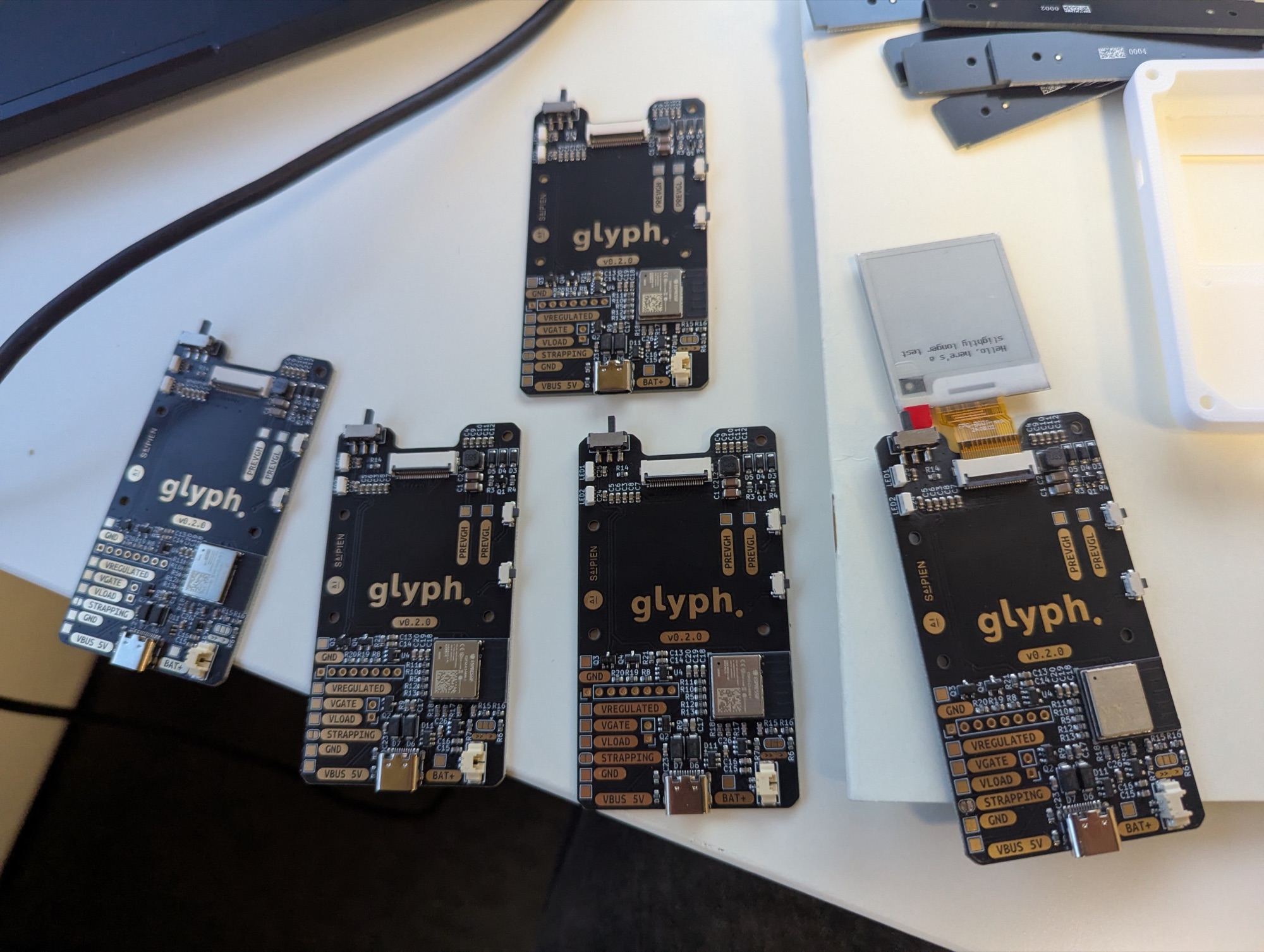
V2 started with a question about form. The wallet is something you carry because it fits. If an instrumented wallet is going to become a natural part of how someone moves through the world, the device has to earn its place in the pocket. That meant eliminating the display driver board and doing a custom version of the boost converter needed for the screen, and placing an ESP32-C3 Mini directly onto a custom PCB. Losing the battery management provided by the original XIAO forced me to include my own in the new design. The result is a board the size of a credit card and thin enough that the enclosure finally feels like a wallet rather than a wallet with something attached to it.
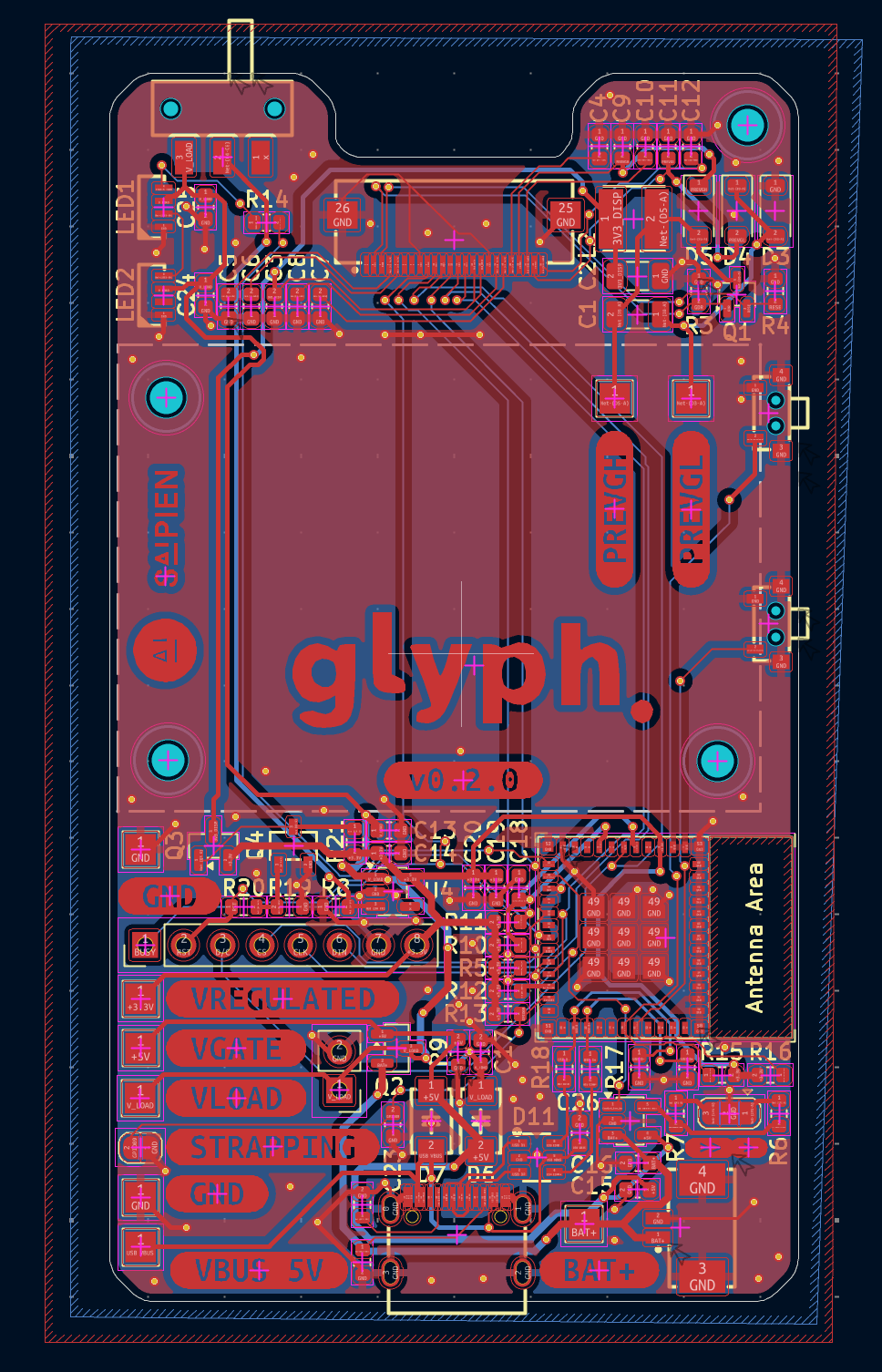
Getting a professionally manufactured PCB made is more accessible than it used to be. Tools like KiCad are mature and free. Fabrication services like JLCPCB or PCBWay will produce and assemble a small run of boards for a very reasonable cost. The main investment is time spent learning, but the barrier between a design on a screen and a physical board in your hands has come down considerably. I don’t think that’s a small thing. It changes what’s worth attempting. I will also point out that one of the key skills these days is knowing how to learn new things. It requires some reflection about how your brain works. And in many cases it requires you to be conscious about how to get what you need out of LLMs. Having a Senior Electrical Engineer in Claude or ChatGPT at my fingertips at all times has been a huge help these last few weeks.
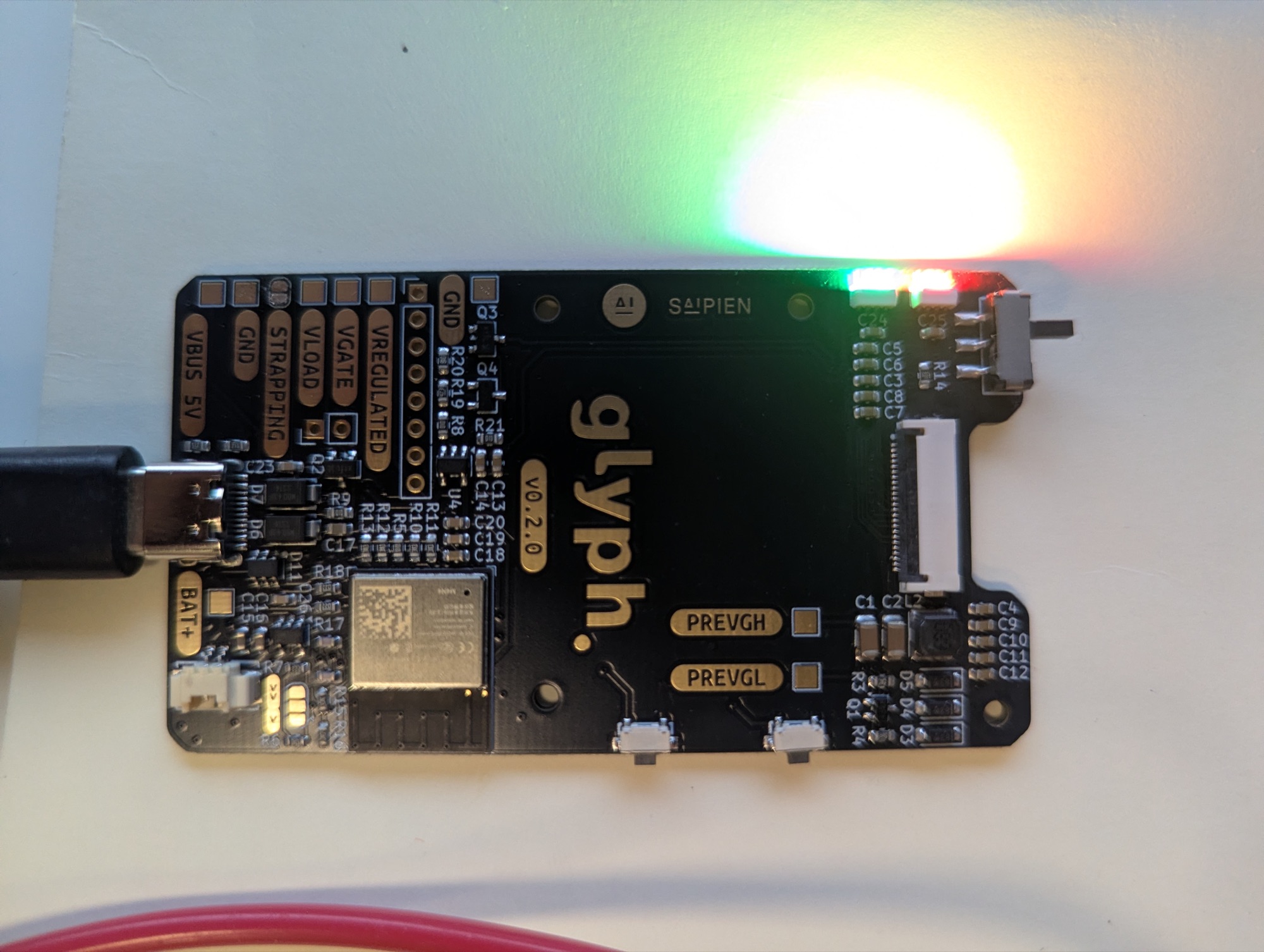
The functional story is the same as v1: Snap Spectacles push content to the wallet, an e-ink display renders it, two buttons handle confirmation and dismissal. Boarding passes, journaling prompts, whatever makes sense. But the device now fits differently in the hand, and in the pocket. When I presented glyph as the final project in How To Make Almost Anything, Neil Gershenfeld commented on the form factor. I would like to believe that he would be happier with it now.
The bigger questions haven’t changed. A phone can show a QR code to a gate reader, an airport kiosk, a parking meter. XR glasses, for now, can’t — the world’s external systems aren’t built for them. glyph is one way of thinking about what bridges that gap: an everyday object you already carry, quietly connected, able to participate in infrastructure that was designed around the phone. Whether that framing turns out to be right is genuinely uncertain. But it feels like an interesting place to start asking questions.